
What Are the Rules and Etiquette at a Clothing-Optional gay resort Costa Rica?
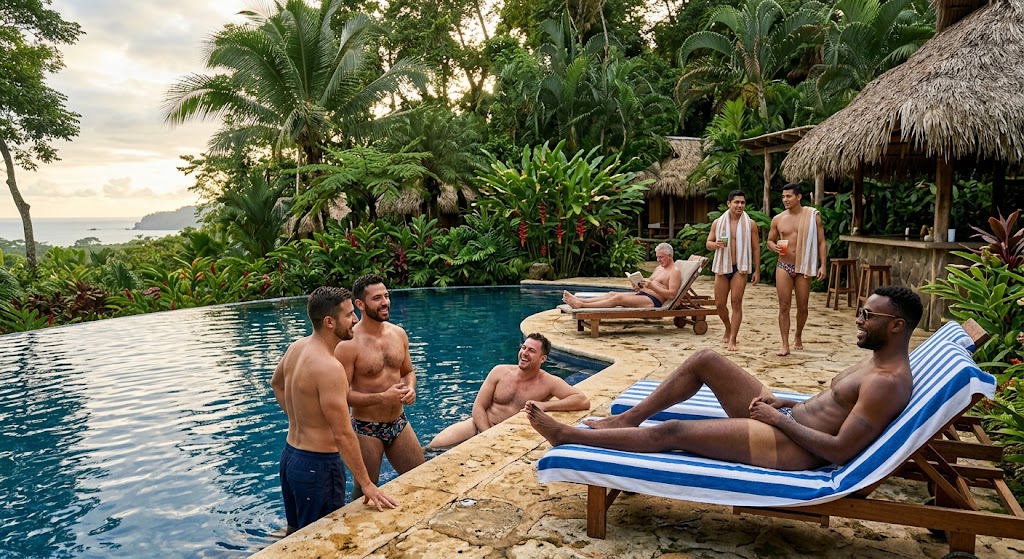
The first time you step from shaded rainforest air onto warm pool stone, the question is rarely whether you packed enough swimwear; it is whether you know the rhythm of the place. At a gay resort Costa Rica setting like Royal Grand Resorts, an all-male resort Costa Rica experience in Manuel Antonio, clothing-optional does not mean rule-free. It means the property has created space for adult guests to relax with more freedom than they might have at a conventional hotel, while still expecting the same basic courtesy, consent, and awareness that make any shared environment comfortable.
The easiest way to understand the etiquette is to separate choice from assumption. You may choose to wear swim trunks, a sarong, underwear, or nothing at all in designated areas, but another guest’s choice does not invite comments, staring, touching, jokes, or evaluation. A clothing-optional atmosphere works best when nudity becomes ordinary rather than performative. The person reading on a lounger, stepping into the pool, or walking back to his room should feel that his body is not being treated as public entertainment.
Most resorts that allow nudity have clear boundaries about where it is appropriate. Pool decks, sun terraces, hot tubs, and certain garden areas may be clothing-optional, while reception areas, dining rooms, public-facing entrances, parking areas, or off-property spaces usually require clothing. In Manuel Antonio, the resort environment sits within a broader Costa Rican community, so discretion matters once you leave the private grounds. A towel, shorts, and sandals near common walkways can prevent awkward moments with staff, delivery drivers, maintenance teams, or neighbors.
A useful rule is to look for posted guidance first, then follow the tone set by staff and regular guests. If towels are required on chairs, use one every time. If glass is not permitted near the pool, switch to a plastic cup without complaint. If music is kept low in the afternoon because guests are resting, do not turn your speaker into the soundtrack for everyone else’s vacation. The more intimate the resort, the more one guest’s behavior can shape the mood for the whole property.
Consent is the central rule. Clothing-optional does not mean flirtation-optional, conversation-optional, or invitation-optional. Compliments can be welcome when they are respectful and brief, but pressure is not. If someone gives short answers, keeps headphones in, turns away, closes his eyes, or says he is relaxing alone, accept that immediately. In a gay travel setting, it is easy to confuse shared identity with instant intimacy. Good guests understand that community is built by giving people room to decide how social they want to be.
Privacy deserves special attention because phones are everywhere. Even a casual pool photo can accidentally capture someone who has chosen a level of freedom he would not want shared online. Before taking pictures, check whether photography is allowed in that area, frame carefully, and ask everyone visible for clear permission. Never film the pool, hot tub, balcony, or bar area as background content for social media. A guest who feels safe from unwanted images is far more likely to relax, socialize, and return.
Finally, remember that Costa Rica’s “pura vida” spirit is warm, relaxed, and friendly, but it is not a license to ignore boundaries. Treat staff with the same respect you give fellow guests. Tip appropriately when service is strong. Keep pathways clear, rinse off before entering shared water, use sunscreen thoughtfully so furniture and linens are not coated in oil, and moderate alcohol so your confidence does not become someone else’s problem. The real luxury of a clothing-optional resort is not nudity itself; it is the trust that everyone present will protect the calm, playful, and respectful mood that makes the experience special.
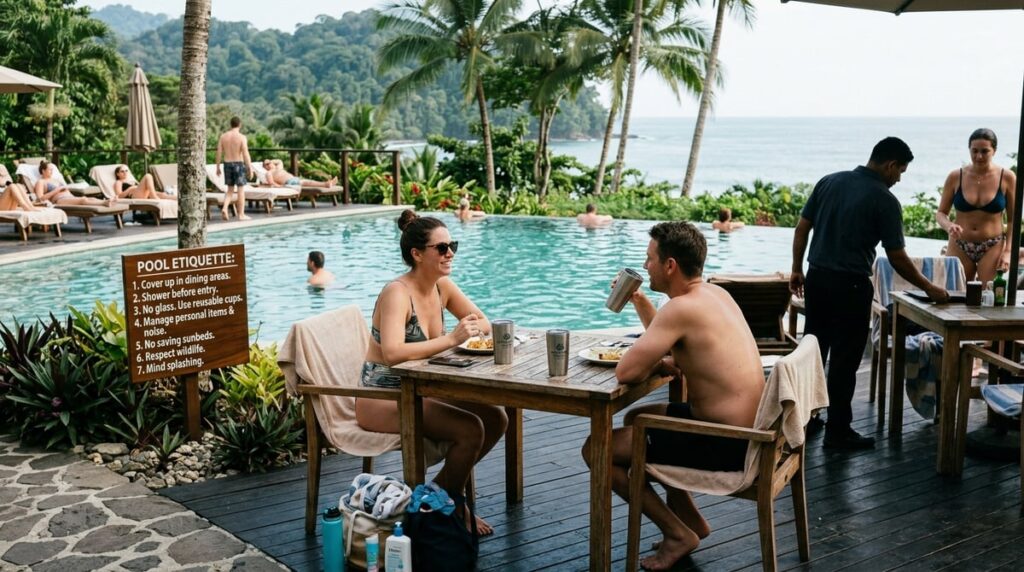
Poolside Etiquette in Manuel Antonio
Good etiquette is simple: use a towel, ask before joining, never photograph without consent, and keep public affection sensual but respectful. Around a pool, these basics matter because everyone is sharing the same chairs, steps, water, shade, music, and line of sight. A small act that seems harmless in a private room can feel intrusive in a common area, especially at a boutique resort where guests see one another throughout the day.
Asking before joining is equally important. If two guests are sitting close together in the hot tub, floating quietly in the pool, or talking in low voices under an umbrella, they may not be inviting company. A simple “Mind if I join you?” gives them an easy chance to welcome you or decline. If you do join, enter slowly, keep a respectful distance, and read the mood before steering the conversation toward travel stories, nightlife plans, or flirtation. Friendly does not have to mean intense.
Poolside conversation should fit the setting. Many guests come to Manuel Antonio after early flights, long transfers, rainforest hikes, or beach days, so the pool may be their recovery zone. Keep voices at a level that allows others to nap or read. Avoid loud discussions about another guest’s body, relationship status, room number, nationality, or sexual history. If you meet someone at breakfast or on a tour, do not assume he wants the same level of interaction while sunbathing. Context changes comfort.
Photography is where good intentions often fail. You may want a shot of the jungle view, your cocktail, the sunset, or the blue water, but at a clothing-optional resort the background matters as much as the subject. Aim away from loungers and balconies. Ask before taking a group picture, and ask again before posting it. Consent to be in a vacation photo is not automatically consent to be tagged on social media. Some guests may not be out at work, with family, or in their home community, and protecting that privacy is part of responsible gay travel.
Public affection can be part of the pleasure of an adults-only or all-male space, particularly for men who are used to monitoring themselves in public. Holding hands, a kiss, a relaxed embrace, or quiet flirting may feel freeing and appropriate. Still, shared areas are not private bedrooms. Keep sexual activity, prolonged intimate touching, and explicit behavior out of the pool, restaurant, pathways, and places where staff must work. The goal is not to make the atmosphere sterile; it is to keep it comfortable for guests with different social styles.
Alcohol, heat, and steep terrain also affect poolside etiquette in Manuel Antonio. Tropical sun can make drinks hit harder, and wet stone can be slippery. Pace yourself, hydrate, wear sandals where the surface gets hot, and avoid rough play in or around the pool. If you spill a drink, break something, or notice a hazard, tell staff immediately rather than leaving it for the next barefoot guest. The best poolside guests are relaxed but attentive: they enjoy the freedom of the space while helping everyone else enjoy it too.
Finally, remember that the resort is not separate from the natural setting that makes Costa Rica so appealing. Do not feed monkeys, iguanas, birds, or other wildlife that may pass through the property. Secure food, close doors when needed, and follow staff guidance about animals near balconies or breakfast areas. Use reef-safe or eco-conscious sunscreen when possible, dispose of cigarette butts properly if smoking is permitted only in designated areas, and keep the pool area free of plastic waste. Etiquette here is not only social; it is also environmental.
Common Questions
Do I have to be nude at a clothing-optional resort?
No. Clothing-optional means you choose your comfort level while respecting the venue’s rules and other guests’ privacy. Some guests are nude most of the day, some wear swim briefs or shorts, and others ease into the experience slowly by starting with a robe, towel, or sarong. There is no need to perform confidence before you feel it.
If it is your first visit, take a practical approach. Arrive in what feels comfortable, walk the property, notice which areas are clothing-optional, and read any posted guidelines. You can always remove clothing later, but you should not feel pressured by other guests’ choices. Likewise, avoid making another person feel overdressed or underdressed. A comment like “You do not have to wear that here” may be intended as encouragement, but it can sound like pressure.
Pack for flexibility: swimwear, sandals, light cover-ups, sunscreen, and a small bag for moving between your room, the pool, and dining areas. Use a towel when sitting, dress where the resort asks you to dress, and ask staff if you are unsure about a specific area. The best clothing-optional experiences are relaxed because no one is forced into a single style of comfort.