
Do You Have to Be Naked at a Clothing-Optional Resort Pool? A gay resort Costa Rica Guide
The short answer is no: clothing-optional means choice, not a command. At an adults-only, all-male resort in Manuel Antonio, Costa Rica, the pool is about comfort, consent, and ease. You can swim in trunks, relax in a towel, wear a sarong, or go nude if that feels natural to you. The point is not to meet someone else’s idea of how a vacation should look, but to settle into your own pace. For many guests, that first hour by the pool is less about making a statement and more about reading the atmosphere: where people sit, how they move between the water and the bar, how much privacy the property offers, and what feels comfortable in the tropical heat.
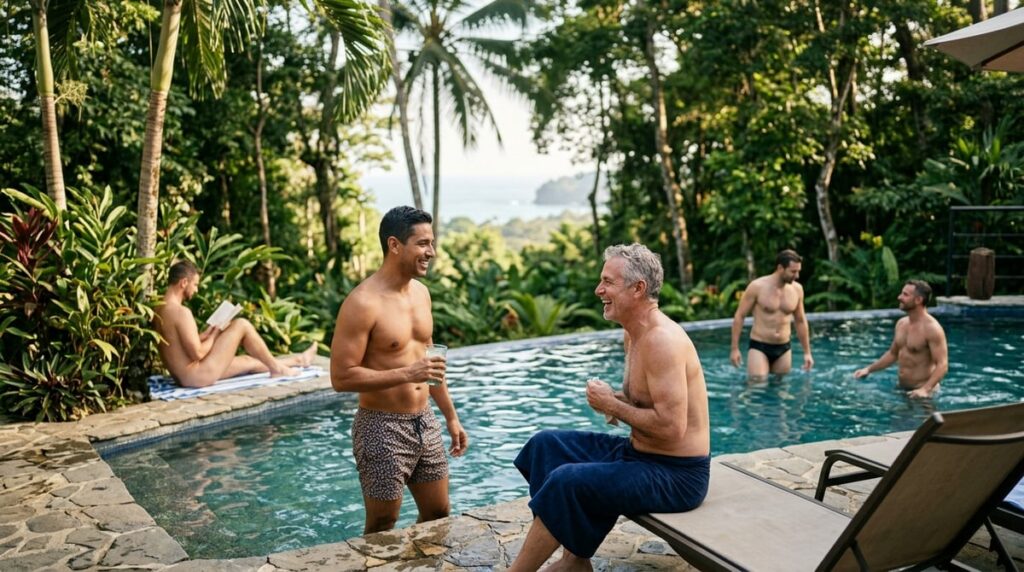
Clothing-optional resorts work best when everyone understands the word optional. Some guests arrive already comfortable being nude around a pool, especially if they have visited similar resorts, saunas, beaches, or guesthouses before. Others are curious but cautious. They may start with swim briefs, remove a shirt, switch to a towel on a lounger, or decide that trunks are perfect for the whole stay. None of those choices is wrong. A respectful resort culture does not treat nudity as a test of confidence, masculinity, or belonging. It simply creates a setting where nudity is permitted and normalized, while clothing remains equally acceptable.
In a place like Manuel Antonio, practical considerations often shape what guests choose. The climate can be warm, humid, and bright, with strong sun near midday and quick tropical showers in the afternoon. Someone may go nude in the pool because it feels cooler, then put on a rash guard or light cover-up to protect their shoulders. Another guest may prefer swimwear because they plan to walk back through a shared corridor, order lunch, or sit at the bar. Comfort changes through the day. What feels good during a quiet morning swim may feel different during a busier happy hour, and clothing-optional etiquette allows for that flexibility.
If you are visiting for the first time, it is completely normal to feel unsure. A simple approach is to arrive in swimwear, take a look around, and give yourself time. Put your bag down, grab a towel, order a drink, or step into the pool without making any immediate decision. After ten or fifteen minutes, you will usually understand the tone of the space. Some pools are lively and social, with guests chatting across loungers. Others are quiet, with people reading, sunning, or watching the forest canopy. Manuel Antonio also has wildlife and lush scenery, so the setting itself can help take pressure off the question of what anyone is wearing.
Consent is the foundation of a comfortable clothing-optional pool. Nudity does not mean availability, and it does not remove ordinary boundaries. Staring, commenting on bodies, making assumptions, or treating someone’s choice to be nude as an invitation is not appropriate. Friendly conversation is welcome when it is mutual, but guests should remain aware of body language and personal space. If someone is reading, wearing headphones, resting with eyes closed, or giving short answers, let them be. The best pool environments feel relaxed because everyone trusts that they can enjoy themselves without being evaluated, photographed, pressured, or pursued.
Photography deserves special care. At many clothing-optional properties, photos around the pool are restricted or discouraged, and for good reason. Guests may be out, private about their travel, or simply unwilling to appear in someone else’s vacation album. Even a harmless selfie can accidentally capture people in the background. Before taking any photo, check the resort rules and look carefully at what is behind you. If you want a picture with friends, ask staff where it is appropriate or wait for a spot with no other guests visible. Privacy is one of the details that makes clothing-optional hospitality feel safe rather than awkward.
Towels are another small but important part of the etiquette. Whether you are nude or wearing swimwear, use a towel when sitting or lying on shared furniture. Place it on loungers, chairs, benches, or any common seating area. This is both hygienic and considerate, and it is standard practice at naturist and clothing-optional venues around the world. It also gives first-time guests an easy comfort tool: you can wrap up while walking to the restroom, cover your lap while talking, or use the towel as a casual layer without feeling like you are making a big decision every time you leave the water.
Different areas of a resort may also have different expectations. The pool deck may be clothing-optional, while the lobby, reception area, restaurant, or street-facing spaces may require clothing. Even at an all-male, adults-only property, staff may need to move between public and private zones, vendors may make deliveries, or local regulations may apply. It is wise to read the welcome materials or ask at check-in: Is nudity allowed only at the pool? Is it acceptable in the hot tub? Do guests need shorts or a cover-up for breakfast? Clear rules help avoid embarrassment and keep the atmosphere easy for everyone.
The all-male, adults-only aspect can make the pool feel especially relaxed for many travelers, but it should not be confused with a lack of manners. Guests may be couples, singles, friends, locals, repeat visitors, or people on their first trip to Costa Rica. Some may be outgoing; others may value solitude. A good rule is to treat the pool like any intimate shared environment: be warm, be polite, and do not assume familiarity. If a conversation develops naturally, great. If not, a smile and a respectful nod are enough. Clothing-optional spaces are often most enjoyable when guests do less performing and more simply being.
Body confidence is another reason people worry about whether they have to be naked. They may wonder if they are fit enough, young enough, tan enough, or experienced enough. In reality, a healthy clothing-optional setting includes a range of ages, body types, skin tones, scars, bellies, hair, and personal styles. The more time you spend in such a place, the more ordinary bodies become. That ordinariness can be freeing. You may realize that most people are not studying you; they are thinking about sunscreen, lunch, the view, the temperature of the pool, or whether they should book a national park tour for the next morning.
There are also good reasons to keep some clothing on. Swimwear can prevent sunburn in sensitive areas, reduce chafing during pool games or long walks, and make transitions easier if you are moving between resort areas. A light shirt, hat, or cover-up can be essential under the Costa Rican sun, especially for guests who are not used to equatorial UV exposure. Sunscreen should be applied generously and reapplied after swimming, but fabric protection still matters. Choosing clothing for health, convenience, or confidence is not less authentic than choosing nudity. The best choice is the one that lets you relax and enjoy the day.
If you do decide to try going nude, start simply. Choose a lounger with a towel, take off what you are comfortable removing, and do not overthink the moment. You can slip into the pool, float for a while, and see how it feels. Many first-timers discover that the nervousness fades quickly once nothing dramatic happens. Other guests keep talking, the water feels the same, the sun remains warm, and the experience becomes ordinary. If you change your mind, put your suit back on. Clothing-optional does not require consistency. You can be nude in the morning, clothed after lunch, and wrapped in a towel at sunset.
Staff play an important role in setting the tone. A well-run resort will communicate expectations clearly, intervene discreetly if someone behaves inappropriately, and make guests feel welcome regardless of what they wear at the pool. If you are uncertain about a rule, ask privately rather than guessing. Questions such as whether swimwear is required in certain dining areas, whether outside visitors can use the pool, or whether photos are allowed are common hospitality questions, not signs that you do not belong. Good staff would rather clarify early than have guests feel uncomfortable later.
It can also help to separate the pool environment from the beach experience in Manuel Antonio. Public beaches are not the same as a private resort pool, and local customs, laws, and family presence matter. What is acceptable inside a private, adults-only, clothing-optional property may not be acceptable on a public stretch of sand, on the street, or near the national park. Pack accordingly if you plan to move between settings: swim trunks for public areas, sandals for hot pavement, a shirt for restaurants, and perhaps a small dry bag for your towel and sunscreen. Respecting the broader destination is part of being a good guest.
Ultimately, you do not have to be naked at a clothing-optional resort pool. You are allowed to choose, adjust, and change your mind. The ideal atmosphere is not one where everyone looks the same, but one where everyone feels respected. Wear trunks if that helps you ease in. Go nude if that feels comfortable. Use a towel, protect your skin, follow the house rules, and give other guests the same freedom you want for yourself. In that kind of environment, the pool becomes less about clothing and more about vacation itself: warm water, good conversation, quiet moments, and the pleasure of feeling at home in your own body.