
What Wildlife Can I Expect Near a Manuel Antonio Gay Resort?
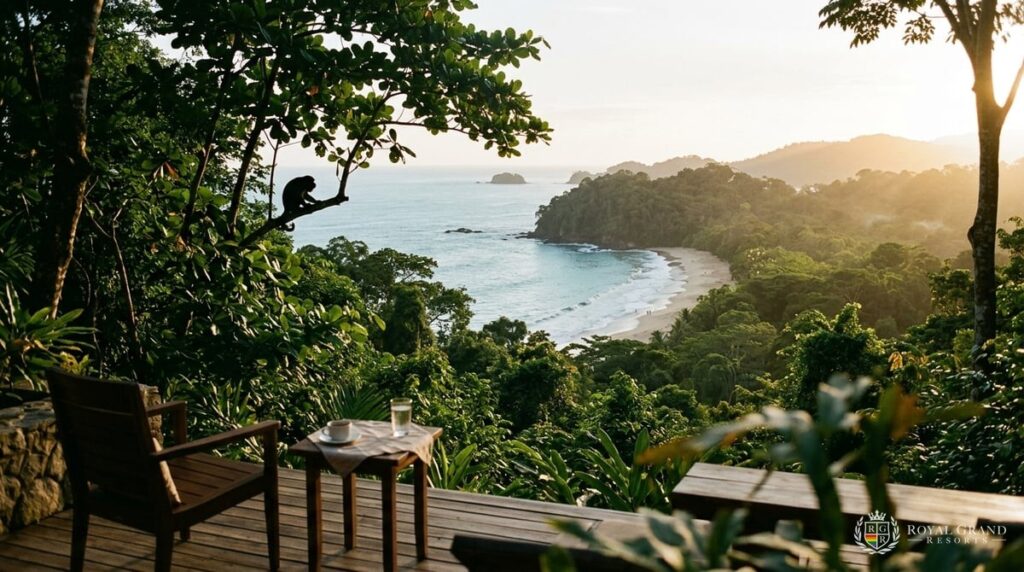
What wildlife can I expect to see near a gay resort Costa Rica in Manuel Antonio?
The first sound may not be a bird at all, but a deep, theatrical roar rolling through the trees before breakfast: howler monkeys announcing the day like they own the canopy. If you are planning a gay vacation Costa Rica around a Manuel Antonio gay resort, wildlife is not a side excursion here; it is part of the atmosphere, stitched into mornings, beach walks, roadside pauses, and those golden-hour conversations when your group suddenly goes quiet because something moved in the branches.
Manuel Antonio, near Quepos in Puntarenas Province, is one of Costa Rica’s most rewarding places to watch tropical wildlife without needing to disappear into remote wilderness. Rainforest meets Pacific coast, which means you can go from coffee and fresh fruit to monkeys, sloths, iguanas, toucans, and scarlet macaws in a single relaxed morning. Sightings are never guaranteed, because wild animals keep their own schedules, but the region is known for frequent encounters with charismatic species that even seasoned travelers remember.
For guests at Royal Grand Resorts, the pleasure is in the contrast: intimate, adults-only Luxury all-male accommodations with only 30 rooms, then the lush, unruly life of Costa Rica just beyond. You can spend the day in hiking shoes and salt air, then return to an all-male, clothing-optional setting where the soundtrack may still include cicadas, surf, and a monkey call from somewhere beyond the palms.
The headline animals: monkeys, sloths, macaws, and the creatures everyone hopes to meet
Ask most travelers what they want to see near Manuel Antonio and the same animals rise to the top: monkeys, sloths, scarlet macaws, toucans, and iguanas. The good news is that these are not obscure possibilities. They are among the species commonly associated with the area’s rainforest and coastal habitat, especially in and around Manuel Antonio National Park and the green corridors surrounding Quepos.
Monkeys tend to steal the scene. Mantled howler monkeys are often heard before they are seen, their calls carrying through the forest with surprising power. White-faced capuchin monkeys may appear in troops, clever and expressive, especially near popular trails. Squirrel monkeys are also associated with the region, though you should keep expectations respectful and let guides help you understand where and when sightings are more likely.
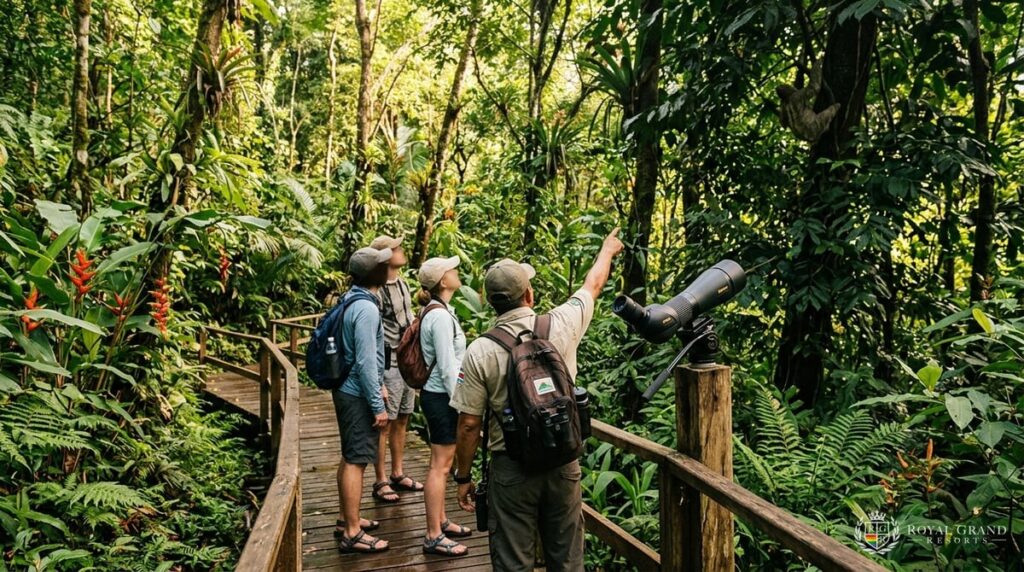
Sloths reward patience. Both two-toed and three-toed sloths live in Costa Rica, and in Manuel Antonio you may spot one curled into a greenish bundle high in a cecropia tree. A guide’s scope can turn what looks like a lump of leaves into a face, claws, and slow, deliberate movement.
Birdlife brings color to the day. Scarlet macaws flash red, blue, and yellow against the sky, often traveling in pairs. Toucans and aracaris may appear around fruiting trees, while hummingbirds work flowers in quick, metallic blurs. On warmer rocks and sunny paths, iguanas and basilisks look prehistoric in the best possible way.
Where wildlife watching fits into gay travel Central America — without giving up comfort
The smartest way to experience wildlife near Manuel Antonio is not to over-schedule it. This corner of Costa Rica works beautifully for gay travel Central America because you can have genuine nature immersion and still sleep somewhere polished, intimate, and designed for your social rhythm. You do not need to choose between a serious wildlife morning and a poolside afternoon with the guys.
Manuel Antonio National Park is the obvious starting point, with marked trails, beach access, and guides who can help locate animals you would likely miss on your own. Early starts are usually best for cooler temperatures and active wildlife, but the real advantage is attention. When your phone is away and your pace slows, the forest begins to sort itself into layers: leafcutter ants crossing the path, a sloth tucked above eye level, a lizard holding still on a trunk, a bird call that pulls your gaze toward the canopy.
Wildlife also appears outside formal park time. You may see birds over breakfast, iguanas sunning near paths, or monkeys moving through trees along roadsides and hotel gardens. Keep distance, never feed animals, and avoid leaving food visible. Capuchins, in particular, are smart enough to turn a careless snack into theater.
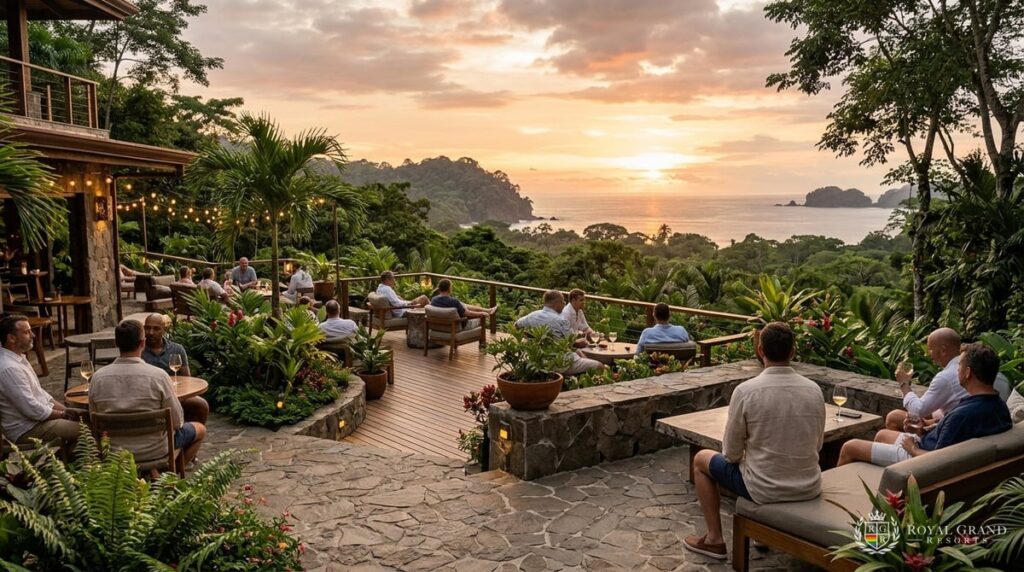
After a morning in the forest, returning to an all-male resort Costa Rica setting changes the tempo. The warm stone under bare feet, a cold drink, a shower after salt and humidity, and the easy privacy of an adults-only environment let the day land slowly.
Coastal and marine wildlife: what you may notice beyond the rainforest canopy
Manuel Antonio’s wildlife is not limited to the trees. The coast adds another layer, especially for travelers who like their nature with warm sand, blue water, and a little salt on the skin. Along beaches and rocky edges, you may notice crabs, shorebirds, pelicans, frigatebirds, and lizards moving between sun and shade.
The ocean itself can offer seasonal surprises, though responsible expectations matter. Depending on timing and conditions, boat trips in the wider Quepos and Manuel Antonio area may encounter dolphins, sea turtles, or migrating whales. These sightings should be treated as possibilities, not promises. Choose operators who keep respectful distance from wildlife and follow local guidance on marine encounters.
Mangrove and estuary tours are another strong option for your group if you want a gentler pace than hiking. These habitats can reveal herons, kingfishers, crocodiles, bats, and monkeys along the waterline. A boat moving through mangroves feels different from a forest trail: quieter, shaded, and reflective, with roots dipping into dark water and birds lifting off before you fully register them.
This is where the Royal Boys concierge service becomes useful. Rather than sorting through every tour after a long flight, you can ask for help choosing wildlife outings that match your group’s energy: a focused park guide for the photographers, a mangrove float for the anniversary couple, or a private-feeling day that leaves room for dinner and a slow night back at the resort.
How to watch wildlife well: timing, etiquette, and what to pack
Wildlife watching near Manuel Antonio is less about luck than about patience, good timing, and good manners. Mornings are often more comfortable for walking, and animals may be easier to notice before the day grows hot. Late afternoon can also be rewarding, especially for birds and the shifting light that makes the canopy glow.
Hire a licensed local guide when you can, especially for Manuel Antonio National Park. A guide’s trained eye changes the experience. They know where to look, how to interpret movement, and how to use a spotting scope without crowding an animal. For design-aware travelers who care about detail, this is the difference between seeing “some trees” and reading the forest like a living room full of personalities.
Pack light but intelligently:
- Binoculars for birds, sloths, and canopy movement.
- Breathable clothing that handles humidity and dries quickly.
- Closed-toe walking shoes for trails, roots, and wet patches.
- Reef-safe sun protection and a refillable water bottle.
- A quiet camera setup or phone lens, used without flash near animals.
The etiquette is simple: keep distance, stay on marked paths, do not feed wildlife, and resist the urge to stage a photo. Wild animals are not props for a group chat. The better memory is usually the unforced one: your husband tapping your shoulder because a macaw just crossed the sky, your friends falling silent because a sloth finally moved, your own body slowing to the pace of the forest.
Planning the trip: SJO access, Quepos connections, and the rhythm of a wildlife-forward stay
Manuel Antonio sits near Quepos in Puntarenas Province, Costa Rica. Most international travelers arrive through Juan Santamaría International Airport (SJO) in San José, then continue by a short connecting flight to Quepos/Manuel Antonio or by a private transfer that is roughly a few hours by road. Royal Grand Resorts can help you think through the most comfortable arrival plan for your group, especially if you are coming from New York, Miami, Los Angeles, Toronto, London, or Frankfurt with direct or one-stop service into San José.
For a wildlife-forward stay, resist cramming every daylight hour. Manuel Antonio rewards a rhythm: one early guided park morning, one coastal or mangrove outing, one open day for beach time and spontaneous sightings. Leave space for the resort itself. In an intimate gay resort Costa Rica setting, the point is not only what you go out to see; it is how good it feels to return.
Royal Grand Resorts is designed exclusively for gay and bisexual men, with an adults-only, all-male atmosphere that lets you be fully at ease with your boyfriend, husband, or the guys you travel with. After the forest, the privacy matters. You can rinse off the trail, settle into the afternoon, compare wildlife photos, and let the evening find its own shape. There is a sensual pleasure in that sequence: mud on your shoes at noon, warm skin by sunset, howler monkeys somewhere beyond the darkening trees.
Book your wildlife-rich stay at Royal Grand Resorts
The most memorable wildlife moments near Manuel Antonio are rarely loud. A sloth shifts one arm in the canopy. A scarlet macaw cuts through blue sky. A howler monkey calls as evening settles around the pool, and your group realizes the forest has been part of the conversation all along.
For an exclusive, all-male, adults-only stay in Manuel Antonio (Quepos), Puntarenas Province, Costa Rica, make Royal Grand Resorts your base for wildlife, beaches, and the pleasure of returning somewhere designed for gay and bisexual men. Reach us via Juan Santamaría International Airport (SJO) in San José, then continue with a 30-minute connecting flight to Quepos/Manuel Antonio or roughly a 3-hour private transfer. To request availability or plan your stay, contact success@royalgrandresorts.com.
Internal linking suggestions: Luxury all-male accommodations in Manuel Antonio; Planning a gay vacation Costa Rica; Royal Boys concierge service.
Fact-check notes for editors: Verify SJO transfer details, including 30-minute connecting flight and roughly 3-hour private transfer; confirm current Manuel Antonio National Park access rules and guide requirements; verify seasonal marine wildlife possibilities with local operators; confirm species commonly seen near Manuel Antonio before publication.
Common Questions
What animals am I most likely to see near Manuel Antonio, Costa Rica?
Commonly reported wildlife in the Manuel Antonio area includes howler monkeys, white-faced capuchin monkeys, sloths, iguanas, basilisks, toucans, scarlet macaws, hummingbirds, shorebirds, and many smaller rainforest species. Sightings vary by season, weather, time of day, and animal movement, so treat every encounter as a privilege rather than a guarantee.
Do I need a guide to see wildlife in Manuel Antonio National Park?
You can walk marked trails on your own, but a licensed guide can greatly improve the experience. Guides often carry spotting scopes and know how to find animals hidden high in the canopy, including sloths, birds, lizards, and resting monkeys that casual visitors may miss.
Can I see wildlife from a resort near Manuel Antonio?
It is possible to notice birds, iguanas, and sometimes monkeys in the broader Manuel Antonio area, including around landscaped properties and green corridors. Royal Grand Resorts offers intimate Luxury all-male accommodations near this habitat, but wildlife remains wild and should never be fed, approached, or expected on command.
What is the best time of day for wildlife watching near Manuel Antonio?
Early morning is often a smart choice because temperatures are cooler and many animals are active. Late afternoon can also be rewarding for birds, softer light, and a more relaxed pace. Your ideal timing depends on your plans, weather, and whether you are visiting the park, mangroves, beach, or coastal waters.
Is Manuel Antonio a good destination for a gay vacation Costa Rica focused on nature?
Yes. Manuel Antonio works well for gay and bisexual men who want rainforest wildlife, Pacific beaches, and premium adults-only hospitality in one trip. Staying at a Manuel Antonio gay resort such as Royal Grand Resorts lets you pair guided nature outings with an all-male, intimate base designed for comfort and privacy.